Quick Search

Friday, August 21, 2009

Healthy Foods


Pineapple

Scientific Name: Ananas cosmosus

Biological Background: A tropical plant with stiff, spiny leaves that yields a single large fruit. Pineapple originated in Brazil.

Nutritional Information: One cup (155 g) of raw pineapple contains 76 calories, 0.6 g protein, 19.2 g carbohydrates, 2.95 g fiber, 175 g potassium, 124 mg vitamin C, 0.14 mg thiamin, 0.06 mg riboflavin, 0.65 mg niacin.


Pharmacological Activity: It suppresses inflammation due to Bromelain, an antibacterial enzyme. Pineapple aids digestion and helps to dissolve blood clots, and is food for preventing osteoporosis and bone fractures because of its very high manganese content. It is also antibacterial, antiviral and mildly estrogenic.

Watermelon:


Scientific Name: Citrullus Vulgaris

Biological Background: The fruit of an annual vine belonging to the squash and melon family. Watermelon originated in Africa and has been cultivated since ancient times in the Mediterranean region, Egypt and India.

Nutritional Information: One slice of watermelon (480 g) contains 152 calories, 3 g protein, 34.6 g carbohydrates, 2.4 g fiber, 560 mg potassium, 176 mg vitamin A (RE), 47 mg vitamin C, 0.3 mg thiamin, 0.1 mg riboflavin, and 0.96 mg niacin.

Pharmacological Activity: Watermelon is rich in lycopene, glutathione and vitamin C. It has great activity against cancers and some antibacterial, anticoagulant activity.

Eating Tips: Choose watermelon with a deep red color.

Sunday, August 16, 2009

How to Get Swine Flu Treatment

Health Swine flu : Symptoms & precautions


Swine Flu is a respiratory disease
, caused by a strain of the influenza virus known as H1N1.

Although, H1N1 is the same strain that causes seasonal outbreaks of flu in humans, the latest type is different as it is a mutated version containing genetic material that is generally found in strains of the virus that affect humans, birds and swine (pigs).

What has happened this time is that the flu viruses from humans and pigs have swapped genetic components with each other, and evolved into a completely new variety – Hence the absence of any concrete treatment plan for it.

Although the strain may have originated in pigs, it is now a wholly human disease and is being transmitted person-to-person.

Symptoms:

The first symptoms of swine flu are fever (greater than 100°F or 37.8°C), sore throat, body ache and fatigue. Some patients have also complained about running nose, diarrhoea and vomiting.

Persons who have travelled overseas recently should be extra cautious and seek medical help immediately if they have these symptoms.

But these symptoms alone would not suggest that a person is infected by Swine Flu, as it can be confirmed only after testing a respiratory specimen, that’s taken from the suspected case within the first four to five days.

So it is important to seek medical help if one feels that he/she has flu.

Precautions:

As the flu is now spreading by people-to-people to contact, the infection primarily spreads when a person comes in close contact with an infected person. The simple way to minimise the risk is by covering the mouth and nose while coughing and sneezing and wearing a mask while going close to the infected person.

Maintaining high level of hygiene is also important and one should always wash hands frequently with soap and water.

Since influenza spreads through both air and contact with contaminated surfaces, surface sanitizing may help prevent some infections. For that alcohol is an effective sanitizer, bleach can also be used to sanitize rooms or equipment that have been occupied by patients with influenza symptoms.

Treatment:

People with the flu are advised to get plenty of rest, drink plenty of liquids, avoid using alcohol and tobacco and, if necessary, take medications such as paracetamol (acetaminophen) to relieve the fever and muscle aches associated with the flu.

However, the best way would be to get in touch with your doctor, who can help you get the right treatment.

Preventive medications are not advisable as it may lead to the development of resistance to the only known effective drug Tamiflu – the government of India has adequate stock of the drug.

Emergency Help:

If any person has all or any of the above mentioned symptoms he/she should not panic and get themselves tested in any of the government hospitals.


At present everyone is aware how the epidemic Swine Flu is broadening around the globe.


The most shocking revelation which is observed about the epidemic swine flu keeps snatching away the lives of people ranging from 20-50; hale and hearty fraction of the population.


Swine Flu in the opposition of seasonal Flu.


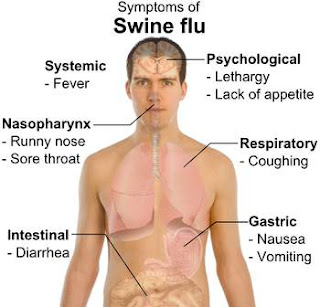
Swine Flu includes symptoms alike high fever and chills, lethargy, nausea, vomiting and diarrhea, lack of appetite, coughing, sore throat, runny nose, body aches, and headaches.


Swine Flu Prevention Tips :-


(1) We can't say it enough: Wash your hands, wash your hands, wash your hands! "Hand washing with soap and water for at least 20 seconds after touching objects, surfaces or another person's hands can physically remove cold viruses.


(2) When water isn't available, use alcohol-based liquid hand sanitizers frequently, especially when hand washing is really not possible. If using a gel, rub your hands until the gel is dry. It does not require water to work; the alcohol in it will kill hand germs. But remember that not all germicidal lotions will adequately kill cold viruses.


(3) If you sneeze or cough, cover your nose or mouth.Avoiding rubbing or touching your eyes and nose. "Don't touch your face. Cold and flu are often spread by hand-to-hand contact, so avoid directly facing an individual who is coughing and sneezing." If you do sneeze into your hands, make sure you clean them, and do this EVERY time you sneeze or cough.


(4) Limit your exposure (even brief contact) to those "sufferers," especially during the first several days of their flu symptoms.


(5) Stay home if you're experiencing any flu symptoms. Do not report to work.


(6) For individuals who are excessively stressed, some studies favor the use of daily vitamin C during the cold and flu season.


(7) Eating a balanced diet and getting adequate sleep is a good first step in keeping your immune system from getting overly stressed.When you're rested, you will be better prepared to fight off illness.


(8) Remind your children to practice healthy habits. And of course that means lots of hand washing, covering their mouth when they cough or sneeze and using hand sanitizers when water isn't available.


(9) Routinely clean and disinfect."Remember,disinfecting actually destroys germs, it doesn't just clean surfaces.Follow instructions of all disinfectants.Germs may live on countertops and surfaces for hours or even days.

Wednesday, April 22, 2009

Yoga for good health


This section provides you with various articles related Yoga and other technics to manage your daily life.

This section provides you with informative articles on Yoga. Simple technics and tips to maintain good health. Before starting to work on Yoga, one has to understand yoga better. For attaining a healthy life, physical excercises, yoga technics need to be practiced with utmost care. These should however be practiced under the supervision of a trained person.

You can find Helpful articles on Yoga, easy to follow yoga Tips and Technics. Introduction to Yoga and its benefits to attain healthy life. Simple and easy to follow physical excercises help you in your daily routine.

Articles for stress relief and eye strain below gives you easy to follow tips and technics to overcome stress and also treat your eyes. These technics result in stress relief and treatment to your eyes.


More........